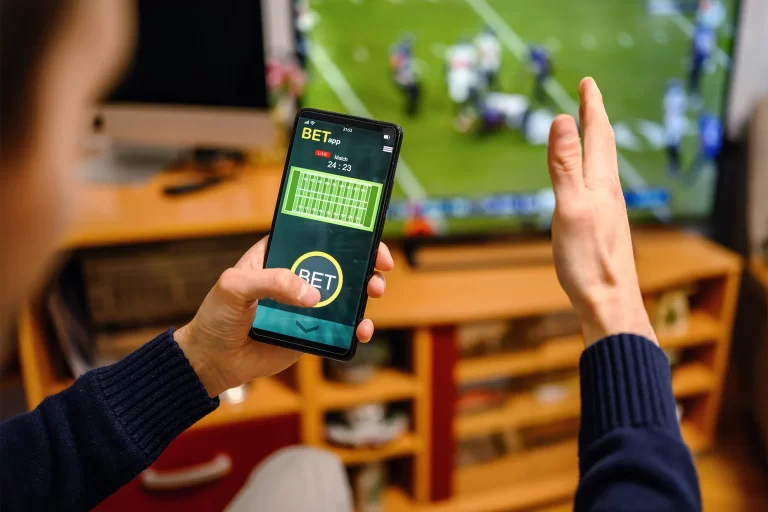




People often expect random events to look balanced, varied, and unpredictable in a way that feels obvious. They may expect wins and losses to alternate, different numbers to appear evenly, or unusual results to happen only occasionally. When real outcomes fail to match these expectations, chance can seem suspicious or unfair.
This reaction is common in gambling, where every result may feel financially important. A player who experiences several losses in a row might believe something has gone wrong. Someone who sees repeated winning results may suspect that they have discovered a reliable pattern. Neither conclusion necessarily follows from the results alone.
Understanding why randomness feels different from what people expect can help separate probability from perception.
Randomness Is Not the Same as Alternation
One of the most common misunderstandings is the belief that random outcomes should take turns. People often picture randomness as a tidy sequence in which different results appear regularly. Visit this page!
Real random sequences can be uneven. They may contain clusters, repetitions, long gaps, and combinations that appear unusual.
Imagine flipping a fair coin ten times. A sequence containing several heads in a row is possible, just as a sequence that alternates between heads and tails is possible. The alternating sequence may look more random to some people because it appears balanced, but appearance alone does not establish how random a sequence is.
The same idea helps explain why a gambling game can produce repeated results without necessarily malfunctioning. A cluster can occur naturally under a random process.
Why Streaks Feel Unusual
A streak draws attention because repetition is easy to notice. Three similar outcomes in a row may feel significant, particularly if a player has money at stake.
The mind may immediately search for a cause. A player might believe that a game has become more favourable, that an unlucky phase is ending, or that a particular result is now less likely.
However, a streak is not automatically evidence of a changing probability. In a process with independent outcomes, the next event is not required to balance the previous sequence.
For example, if a fair coin has landed on heads five times, the next toss still has a 50% chance of landing on heads. The earlier results do not force tails to appear.
Gambling games have different mathematical structures, so the relevant rules and probabilities matter. The essential point is that a streak should not be interpreted as proof of what comes next.
The Gambler’s Fallacy
The gambler’s fallacy is the mistaken belief that a particular result becomes more likely simply because it has not appeared recently.
Suppose a player sees several losses and decides that a win is now overdue. They increase their stake because they expect the sequence to correct itself.
If the outcomes are independent, this reasoning is flawed. The game does not owe the player a win, and the previous losses do not automatically improve the next result.
The belief can become particularly costly when someone tries to recover losses. Each additional attempt is treated as a step toward the expected correction, even though the desired result may never occur during that session.
A more accurate approach is to evaluate each decision using the actual rules and probabilities, not the emotional impression that chance must soon become fair.
Why Randomness Can Look Different From Our Expectations
People often judge random events against a mental picture of what a typical sequence should look like. When a real sequence differs from that picture, it can seem too repetitive or too uneven.
There are several reasons for this:
Small samples can be uneven. A short series of results may not resemble the overall probabilities. Ten attempts are not guaranteed to reflect the long-term distribution.
Unusual events attract attention. Repeated results or long streaks are easier to remember than ordinary sequences, even when both are possible.
People expect balance too quickly. A person may expect different outcomes to even out over a short period, even though probability does not promise immediate balance.
Money increases emotional involvement. A surprising result can feel personal when a player has just lost a meaningful amount.
These factors can make ordinary statistical variation feel like evidence of a hidden system.
What Long-Term Probability Actually Means
Probability is often misunderstood as a guarantee about what will happen within a fixed number of attempts.
If an event has a known probability, that figure describes its likelihood under the specified conditions. It does not promise that a certain number of successes will appear in the next ten, fifty, or hundred attempts.
Over many trials, observed proportions may move closer to the underlying probability in suitable repeated independent processes. However, this does not mean that short sequences must balance out or that individual outcomes become predictable.
For gambling, theoretical return figures and probabilities also require careful interpretation. A theoretical return percentage, where provided, describes a model over a very large number of plays and is not a promise of what an individual player will receive.
How to Think More Clearly About Chance
When a result seems too unusual to be random, take a moment to check the assumption behind that reaction.
Read the game’s rules, understand whether outcomes are independent, and avoid drawing strong conclusions from a handful of results. If there is a genuine concern about fairness, use the operator’s formal complaint process and look for relevant regulatory or independent testing information where available.
Most importantly, do not use a streak as a reason to increase spending. A result that feels overdue is not necessarily more likely, and continuing to play cannot guarantee recovery of previous losses.
Conclusion
Chance does not always look random because people expect sequences to be more balanced and orderly than they need to be. Streaks, unusual clusters, and small samples can all occur without revealing a reliable prediction. Understanding probability helps players avoid treating a surprising result as a promise about the next one.
FAQs
1. Why do random results sometimes repeat?
Random processes can naturally produce clusters and repeated outcomes. Repetition alone does not prove that results are being controlled or predicted.
2. What is the gambler’s fallacy?
It is the mistaken belief that an outcome becomes due because it has not occurred recently, even when the events are independent.
3. Does randomness always produce balanced results?
No. Random sequences can be uneven, particularly over a small number of attempts.
4. Does a theoretical return percentage guarantee a player’s return?
No. It describes a theoretical long-term measure under specified conditions, not a guaranteed result for an individual session.