
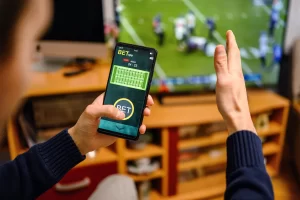


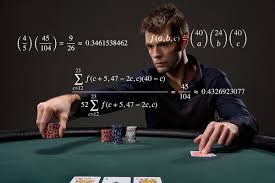
Gambling decisions are influenced by two things: what people think is happening and what the available evidence actually shows. These perspectives do not always match. A player might believe that a win is close after several losses, feel unusually confident following a successful session, or assume that a familiar game has become easier to predict.
Such beliefs are understandable. Gambling involves uncertainty, and the human mind naturally tries to find explanations for events that affect money and emotions. However, a strong feeling does not necessarily reflect the mathematical reality of a game.
Recognising the difference between perception and evidence can help players understand risk, avoid misleading assumptions, and make more deliberate choices.
Believing That a Win Is Due
One common belief is that a win becomes more likely after a series of losses. Players may feel that chance must eventually correct itself and that continuing to play will bring the expected result.
What actually happens depends on the game’s rules and probability structure. In an independent random game, earlier losses do not automatically improve the probability of the next result.
Consider a fair coin. After five heads in a row, the probability of heads on the next toss remains 50%. The previous outcomes do not create an obligation for tails to appear.
The same principle applies to independent random events in gambling. A player may continue playing and eventually win, but the eventual win cannot be assumed in advance.
The practical lesson: Do not increase a stake simply because a win feels overdue. A feeling of expectation is not evidence that the odds have changed.
Believing That Skill Controls Every Outcome
Experience and skill can matter in certain gambling activities. Players may improve their understanding of rules, probability, strategy, and decision-making through practice.
However, skill does not have the same influence in every game. Some outcomes depend primarily on chance, while others combine strategic decisions with uncertain results.
The mistake occurs when someone assumes that experience creates complete control. Knowing a game’s rules may help a player make more informed decisions, but it does not eliminate randomness or guarantee a favourable result.
For example, a player might study a card game’s strategy and learn to make stronger decisions. Even so, the cards dealt and the actions of other participants may introduce uncertainty.
The practical lesson: Understand which elements of a game are influenced by decisions and which remain outside your control. Never treat experience as a promise of success.
Believing That a Memorable Win Proves Long-Term Profit
A large payout can make a strong impression. Someone may remember the excitement of receiving money and conclude that the game is worth returning to regularly.
The reality is that a memorable win represents only one part of the overall financial picture. It does not reveal how much the player spent before winning, what happened afterward, or whether the complete activity produced a profit.
Imagine someone who spends ₹4,000 across several sessions and receives a total of ₹2,500 in payouts. The payouts may feel substantial because money was returned, but the overall result is a net loss of ₹1,500.

Without a complete record, a person may focus on the ₹2,500 received and overlook the larger amount spent.
The practical lesson: Track the full amount spent and received. Evaluate the overall result rather than judging the experience by its most exciting moment.
Believing That a Pattern Predicts the Next Result
People often search for patterns in repeated outcomes. A player might notice that a number has appeared several times or that a particular symbol has been absent for a while.
Sometimes historical information can be useful for understanding a system, but it does not automatically predict the next result. The rules determine whether earlier events have any influence on later ones.
In independent random games, past outcomes do not make an absent result more likely simply because it has not appeared recently. Nor does a series of similar outcomes prove that the sequence will continue.
A chart displaying previous results may describe the past accurately without offering a reliable prediction of the future.
The practical lesson: Before using a pattern to make a decision, establish whether there is credible evidence that the pattern affects future outcomes.
Believing That Confidence Means Better Odds
Confidence can influence behaviour. After a successful session, a player may feel more capable and decide to risk a larger amount. Following a loss, the same person may feel frustrated and attempt to recover the money quickly.
Neither emotional response establishes that the mathematical odds have changed.
Confidence can sometimes support careful decision-making, but overconfidence may lead people to underestimate risks. Frustration can also make it difficult to follow previously established limits.
A player who feels certain about an outcome should still consider the possibility of being wrong. In gambling, certainty is rarely justified when a result remains uncertain.
The practical lesson: Base decisions on rules, probability, and personal limits rather than on the intensity of an emotion.
Believing That a Small Loss Is Not Important
Small individual stakes may seem harmless. A player might think that spending ₹100 several times has little effect on their finances.
However, repeated transactions can add up. Twenty purchases or bets of ₹100 amount to ₹2,000, even if each individual decision felt insignificant.
The real impact also depends on a person’s financial circumstances. An amount that is manageable for one person may affect another person’s ability to pay for food, transport, household expenses, or debt.
The practical lesson: Evaluate spending cumulatively. Set a strict limit based on what you can afford to lose, not on what feels small in a single moment.
Building a More Evidence-Based Perspective
A more realistic understanding of gambling begins with separating assumptions from verifiable information.
Read the rules, understand the odds where available, and recognise that previous results may not predict future independent outcomes. Record spending rather than relying on memory, and avoid making financial decisions while feeling pressured, excited, or frustrated.
It is also important to accept that no strategy can guarantee success in a game governed by chance. If gambling starts affecting essential expenses, relationships, sleep, or emotional wellbeing, taking a break and seeking support can be a sensible step.
The purpose of understanding probability is not to find a perfect way to predict every result. It is to recognise the limits of prediction and make decisions that account for uncertainty.
Conclusion
What players believe and what actually happens can differ because emotions, selective memory, confidence, and mistaken interpretations influence judgement. A win does not prove long-term profitability, a losing streak does not guarantee recovery, and a perceived pattern does not necessarily predict the next result. Comparing beliefs with evidence helps people approach gambling with more realistic expectations and greater awareness of financial risk.
FAQs
1. Why do players sometimes misjudge gambling outcomes?
Emotions, memorable experiences, selective attention, and misunderstandings about probability can influence how players interpret results.
2. Does a previous loss make a win more likely?
Not in an independent random game. The previous loss does not automatically change the probability of the next outcome.
3. Why should players track their total spending?
A complete record helps reveal the overall financial result and prevents memorable payouts from overshadowing cumulative losses.
4. Can an experienced player guarantee a winning result?
No. Experience may improve decisions in some skill-based games, but it cannot eliminate uncertainty or guarantee success.
5. What should someone do if gambling becomes financially stressful?
They should stop risking essential money, consider taking a break, and seek appropriate financial or gambling-support services if needed.


5 thoughts on “The Difference Between What Players Believe and What Actually Happens”