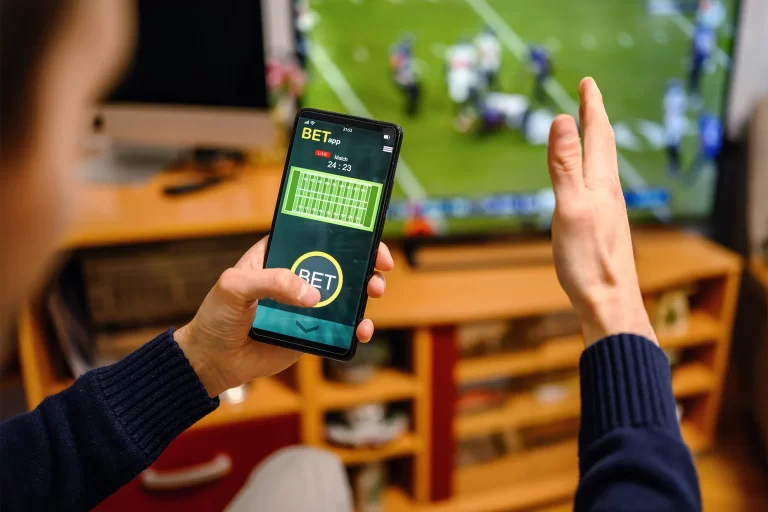




People do not always feel the way mathematics suggests they should. A result with a low probability may seem close because it has appeared in a memorable story, while an ordinary outcome may feel surprising because it contradicts personal expectations. In gambling, this difference between instinct and probability can influence how people spend money and interpret results.
A player might know that a game involves uncertainty but still feel that a win is approaching. Another might believe a particular number is lucky because it appeared during a successful session. These impressions can be powerful, yet they do not necessarily reveal anything about the underlying odds. Read on!
Understanding why instinct and probability sometimes disagree can help players make more informed decisions.
Why Instinct Does Not Always Follow Probability
Instinct is influenced by experience, emotion, memory, and immediate impressions. These mental processes help people make quick decisions in many everyday situations.
Probability, by contrast, requires attention to how likely an event is under specific conditions. It does not change simply because an outcome feels exciting, familiar, or overdue.
Suppose a player sees a large payout displayed on a gambling website. The potential reward may feel attainable because it is easy to imagine receiving it. However, the visual prominence of the prize does not establish how likely it is to be won.
This difference explains why people can understand a risk intellectually while still feeling unusually optimistic about the outcome.
How Memorable Stories Influence Expectations
A story about someone winning a large prize can make the possibility seem more common than it actually is. People may remember the winner, the amount received, and the excitement of the moment, while paying less attention to the number of people who participated without receiving the same result.
This is an example of how availability can influence judgement. Events that are easy to recall may feel more likely, even when the memory does not provide an accurate estimate of probability.
Online content can strengthen the effect when winning screenshots and success stories receive more attention than ordinary losses. A collection of memorable examples is not necessarily a representative picture of typical results.
When evaluating a gambling opportunity, published rules and probability information are more useful than the emotional impact of a personal story.
Why Feelings of Certainty Can Be Misleading
A player may feel certain that a particular outcome will happen because several earlier results seem to support the belief. This confidence can encourage larger stakes or longer sessions.
However, feeling certain and having reliable evidence are different things. A belief may feel convincing without being accurate.
In an independent random game, previous outcomes do not automatically alter the probability of the next event. A player who has observed several losses should not assume that a win is now more likely simply because the losing sequence has continued.
Similarly, a successful result does not prove that the next attempt will also succeed.
The useful question is not how certain the outcome feels, but whether there is credible evidence that supports the prediction.
When Skill and Chance Need to Be Separated
Not every gambling activity works in exactly the same way. Some games involve meaningful strategic decisions, while others depend primarily on random outcomes.
In a skill-influenced game, experience may help a player understand rules, evaluate options, and make better decisions. Even then, uncertainty may remain because other players, random events, or changing conditions can affect the result.
In a game based on independent random outcomes, instinct generally cannot predict the next result simply by interpreting previous ones.
Confusing these two situations can lead people to overestimate their control. Understanding the specific game is more useful than assuming every gambling activity can be approached with the same strategy.
How to Make Decisions When Instinct Disagrees With the Odds
When a strong feeling conflicts with the available information, use a structured approach rather than acting immediately.
Check the evidence. Read the rules and relevant probability information instead of relying on a feeling or anecdote.
Identify the emotional influence. Ask whether excitement, frustration, or the desire to recover money is affecting the decision.
Consider the downside. Evaluate how much could be lost and whether that amount would affect essential expenses.
Follow predetermined limits. Do not increase spending because a particular outcome feels close.
Accept uncertainty. Even a well-informed decision cannot guarantee a win in a game of chance.
These steps are useful because they shift attention away from the emotional appeal of an outcome and toward the actual conditions of participation.
Why Walking Away Can Be a Rational Decision
People sometimes interpret stopping as a missed opportunity, especially when they feel a win may be close. Yet choosing not to continue is also a decision, and it can prevent further financial exposure.
A possible reward does not become more valuable simply because someone has already spent time or money trying to obtain it. Previous spending cannot be recovered by wishing for a better outcome.
If gambling is creating pressure to exceed a budget, stepping away is a practical way to protect remaining funds. The goal is not to prove that instinct is always wrong. It is to avoid treating instinct as a substitute for evidence.
Conclusion
Instinct and probability can disagree because people rely on emotion, memorable experiences, and mental shortcuts when interpreting uncertain outcomes. A strong feeling may explain what someone wants or expects, but it does not establish the actual odds. Checking reliable information, recognising emotional pressure, and maintaining firm financial limits can help support more realistic decisions.
FAQs
1. Why can a low-probability event feel likely?
Memorable stories, vivid rewards, and emotional excitement can make an outcome easier to imagine than its actual probability would suggest.
2. Can instinct predict a random gambling result?
A feeling alone cannot reliably predict an independent random outcome.
3. Does experience improve gambling decisions?
Experience may improve understanding and strategy in some games, but it does not eliminate chance or guarantee a favourable result.
4. What should someone do when instinct conflicts with the odds?
Review the available evidence, consider the potential loss, and avoid changing spending limits based on a feeling.